



african civilizations

7 African Civilizations

7 African Civilizations

1. The Almohad empire

The Almohad empire was a Moorish Dynasty that controlled most of North Africa and all
of southern Spain during their reign. They were founded in 1121. The Almohad was known for their strict adherence to Muslim teachings and their notable fighting skills.

They rose to power defeating the Almoravid, the ruling Moorish Dynasty in 1147. The Almohad looked down on the Almoravid for their loose interpretation of Mohammed’s word. Years before, the Almoravid would call on the Almohad to come up to Spain to put down Christian uprisings for them. It was obvious to the Almohad that the Almoravid had grown weak. So, one time they went up to Spain to help the Almoravids and never left.

2. Axum Empire

Axum was a powerful empire with control over trade around the Red Sea. It expanded
its influence into Southern Arabia by force. Axum was was located in what is present day Eritrea/Ethiopia

The kingdom rose in power in 100 CE and ruled the region until 940 CE. At its height Axum ruled parts of Sudan, Yemen, and Saudi Arabia. Axum was a major trading center. They were situated on the west coast of the Red Sea. Merchants trouble from the interior of Africa India Roman empire Persia to take part in trade

3. Kushite Empire

The kingdom of Kush was known for its warrior Queens called Kandises. These women went up against groups like the Greek and Roman empires. And these empires used caution in dealing with these extraordinary females.

The Kushites were also known for their unparalleled archers. They were said to be able to put arrows in the eyes of their enemy from across the battlefield. These archers were so famous in their time that all the empires in the area wanted to employee them for their war campaigns; Egypt, Rome, Assyria and more.

The Kushite Kingdom conquered Egypt in 760 BC and founded Egypt’s 25th
Dynasty, bringing Egypt back to its former Glory.

4. Benin Empire

Benin was a formidable west African Kingdom that rule the area 1180 to 1897. They are know for their Great Wall and realistic statue sculpting. 

Their Royal horsemen patrolled the great Benin wall which was the longest man-made structure in the world (about 16,000 km in length).

5. The Kongo kingdom

The Kongo kingdom

The Kongo kingdom was located in west central Africa, now northern Angola. They had
several battles with the Portuguese and won most. The kingdom of Kongo was formed in 1390 and ended in 1914. Trade in ivory, gold, salt and other products made the kingdom powerful.

The Kongo also grow by obsorbing surrounding states, some by force. Their kingdom grow to over 2 million. The Europeans  (the Porchigeese) arrived in 1500.  They had several battles with the Portuguese and won most.

6. Great Zimbabwe

The country grew largely because of the their part in the Vital trade on the coast of the
Indian ocean. They traded in ivory, gold, salt and cattle.

The Kingdom of Zimbabwe was a medieval Shona kingdom. They grew largely because of the their part in the Vital trade of the area. The Kingdom controlled the ivory, cattle and gold trade from the inland to the southeastern coast of Africa from the 11th to the 15th centuries C.E.

7. Zulu Nation

The Zulu people migrated from east central Africa to South Africa during the Bantu migration
The Zulu kingdom was founded in 1816 by King Shaka.  He built his well trained army up to 40,000 and explained their territory, taking over the region by force.

After Shaka’s death the Zulus remained a force to recon with. The British were concerned that the Zulu nation bordered their colonies. They were so concerned that they decreed that the Zulu military be disbanded.


The Zulu ignored the order so the British invaded Zululand. Although the Zulu fought with spears against guns the European invaders could not subdue them until they brought in the Gatling gun.

African Civilizations like Egypt, Mali, Axum, Zulu, Bennin, and Zimbobwe.

Tell us what you think.

. . .

Black History DVDs

Find us at:

Tumblr

Twitter

FaceBook

Google+

Black Moors were expelled from Europe

The Moors – Black History Facts

This image has an empty alt attribute; its file name is MOOR-COAT-OT-ARMS-copy.jpg

Where Are The Moors From

The Moors were from northwest Africa (Morocco, Senegal and other places in the area.

This image has an empty alt attribute; its file name is MOOR-COATS8-copy.jpg

Poland: Mora

France: Moret, Morel, Moricaud

Italy: Moretti, Morelli, Morini and Negra, Negrona, Negrina

This image has an empty alt attribute; its file name is MOOR-COATS22-copy.jpg

Germany: Swartz, Swarte, Schwartz

Holland: Schwarzenberger, swarte, Schwartz

Belgium: de Moor, Moer, Moor von Immersel 

Spain Under The Moors

The Moors pulled Spain out of the dark ages. At the time the Moors went into Spain 711ce, Europe had been in its dark ages since 400ce. The Moors brought to State-of-the-arts, old world advancements, while the Spanish were still putting leaches on their patients.

History of the Moors​

Translated, these names mean black or the black. When some Moors (Black African conquerors in Spain) converted to Christianity, they took on Christian names and their last name would be ‘the black’ like Kenneth The Black. The Moor.

The Moors controlled various European countries including Spain (Which they controlled for 700 years,)  All the Eurocentric historians become silent when Europeans of today put on blackface to represent how the Moors looked. 

They do this yearly in their festivals across Europe, celebrating Moorish history on that continent.

euro black face

America being so far from the old world, can hide from what blacks did in Europe. But Europeans don’t have that luxury, they look around and are reminded who the Moors were by their statues (of captured Moors), products (Moor’s head chocolates), saints (St. Maurice) paintings and tapestries. When people ask, were they black? Have them look-up; Moorish Coat-of-arms in Europe  

Were The Moors Black

Black Moors Of Germany

Black Archaeologist- Season #4, Episode #3

Black Archaeologist uses his time machine to uncover Little Known Black History Facts.  In this episode he visits blacks in medieval Germany as their castle is under siege.          

The Black Moors of Germany were powerful rulers of medieval Europe, who like the other Black Moors of that continent, built castles to protect their realms and kingdoms. 

Produced and Created by The Lambert Bros.

Were The Moors Black?

Europeans Seem To Think So

1, The famous writer, Shakespeare, wrote about Moors and used the
words black, negro and Moor interchangeably.

2. Chronicler Alfonso X wrote of Moors attacking Spain “One was blacker than the next”. The color of pitch.

3. Once a year European countries have festivals celebrating Moorish history and they wear blackface.

4. The Spanish word for black man is Moreno. And in Spain they do the Morisco folk dance in blackface.

5. Last but not least. Google ‘Moorish Coat Of Arms in Europe’ and watch all the black people pop up.

Black History DVDs

Find us at:

Tumblr

Twitter

FaceBook

Google+

First Religious statues were Black on every continent

The first Religious statues were Black

India: The first Religious statues were Black in India. Before Buddha looked Chinese, the way we’ve come to know him, he looked like us, an African. And was worshiped like that throughout Asia

Mexico: The Olmec civilization begin in 1200 BC, before the Mayans and the Aztecs. The colossal Negroid heads were the center-piece in religious worship events. The heads are from 5 to 11 feet high and some are over 10 tons.

Egypt: Egyptian pharaohs were also considered religious figures, even divine. The further you go back in Egyptian history the more Negroid Egyptian statues become.

Viet Nam: Viet Nam’s early religious statues were very black. So says this depiction of Vishnu, a Hindu deity. The Chinese called the Champa Empire (now know as Viet Nam) the land of black men.

Thailand: The first Religious statues were Black in Thailand. Thailand’s ancient depiction of Buddha was also very black (negroid).

Rome: The Roman god Hermes was known as The god of poetry.

China: Even China’s early religious statues were very Negroid. 

Russia: The first depictions of mother Mary and baby Jesus were black. And they were worshiped like that all over Europe until the idea of white supremacy came about.  Russia and Poland still worship with the original images.

Cambodia: Angkor Wat (Temple City) is a religious temple that is about 500 acres. It was built in the 12th century by Khmer King Suryavarman. And is the largest religious monument in the world.

The People Of That Time Said The Khmer Were Black

The Chinese described the Khmer people as small black man with flat noses and Curly to kinky hair. At it’s height the Khmer Kingdom stretched from South China to Thailand.

Reference sources:

African Presence In Early Asia by Ranoko Rashidi.

A Book of the Beginnings by Gerald Massey.

African Presence In Europe by Ranoko Rashidi.

Anacalypsis by Godfrey Higgins.

Written by Ray and Michael Lambert (Co-Writers and creators of the Black History Man/Black Archaeologist series).

Share with us on FaceBook

African Female Warriors Of Dahomey

African Female Warriors Of Dahomey

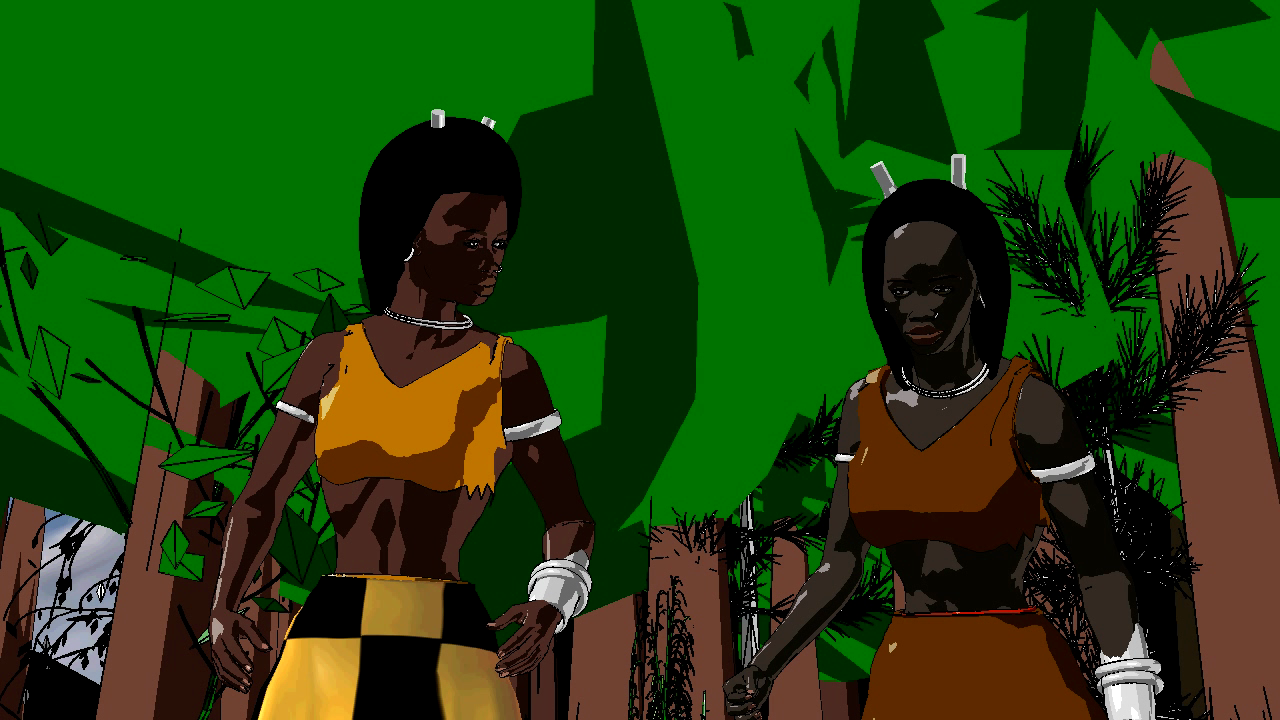
The black amazon of the Dahomey kingdom were a 3,000 strong regiment of heavily armed warriors. Dahomey occupied what is now present day Benin, on the West coast of Africa. They we’re called Amazons because of their similarity to the mythical Amazons of Anatolia (Ancient Turkey). The kingdom of Dahomey lasted about 300 years (from 1600 A.D. to1900 A.D.).  In this Black Archaeologist episode, we tried to capture what it must have felt like to be the enemy of the most fiercest warriors in all of African, The Female Warriors Of The Kingdom Of Dahomey.

DAHOMEY AMAZON WARRIORS  DAHOMEY AMAZON WARRIORS

Black History Man aka Black Archaeologist and his assistant (The Professor) use a time machine to visit various times in black history. The Hidden black history fact in this Episode is the African Female Warriors Of Dahomey.

DVD’s https://BlackArchaeologist.com

Donations GoFundMe

Black History Boy – Children’s Books

THINGS WE DO IN TIMBUKTU

DVD’s

Warrior Princess – Queen Of The Congo

Queen Of The Congo

Warrior Princess

After her father died, the warrior princess (Nzinga of the Congo empire) and her legions of warrior women lead a revolt in to end the Portuguese domination of their kingdom (in 1640).

The warrior princess  and her troops were trained in the use of weaponry such as axes, swords, bows and arrows. They were also trained in the knowledge of battle strategy and tactics from the time they were little girls. Their dedication to the art of war is what finally made the war wearied Portuguese sue for peace.

Warrior women warrior princess

The Queen Of The Congo, Nzinga and her warrior women made an appearance in the episode of the black web series, Black Archaeologist  ‘Way Black In Time #5’.

For additional information on queen Nzinga, check out these web pages.

1. – The Amazons Chapter Vll: Amazons of Africa     http://www.sacred-texts.com/wmn/ama/ama08.htm
 

Find us at:

Tumblr

Twitter

FaceBook

Google+


17Oct/23
black ceazar

Black Caesar – Black Pirate of the Caribbean

Black Pirate of the Caribbean

In the 1600s, the golden age of piracy, thousands of black pirates sailed the Caribbean Sea. One of the most famous among them was Black Caesar. He was known for raiding all types of seagoing vessels, with his favorite targets being slave ships. What set Black Caesar apart was his mission to free thousands of Africans from a lifetime of conservative. Many of these freed individuals joined his crew of runaway slaves as they marauded the high seas. According to folklore, Black Caesar’s looted treasures are said to be hidden on an island named in his honor – Black Caesar’s rock.

http://<a target=”_blank” href=”https://www.amazon.com/b?_encoding=UTF8&tag=lambertv-20&linkCode=ur2&linkId=51aadd6150dde8d88cf1155fb337dd9e&camp=1789&creative=9325&node=163357″>Kevin Hart s Guide to Black History</a>Shop for this DVD

Black Pirates in the Caribbean

The 1600s marked the golden age of piracy in the Caribbean. While the popular image of pirates may be that of white Europeans, it is crucial to acknowledge the significant presence of black pirates during this era. These black pirates, like Black Caesar, played a pivotal role in shaping the history of the Caribbean.

Black Caesar’s Raids on Slave Ships

Black Caesar’s favorite targets were slave ships. He saw them as symbols of oppression and sought to liberate Africans who were being transported against their will. Through his daring raids, he managed to free thousands of enslaved individuals, offering them a chance at a life of freedom and adventure aboard his pirate ship.

Black Caesar’s Crew of Runaway Slaves

As Black Caesar’s notoriety grew, so did his crew. Many of the individuals he freed from slave ships chose to join his crew of runaway slaves. Together, they formed a formidable force, wreaking havoc on the high seas and challenging the established order. They became a symbol of resistance against the oppressive systems that dominated the era.

Folklore and Black Caesar’s Hidden Treasures

Legend has it that Black Caesar’s vast fortunes and looted treasures are still hidden to this day. According to the tales passed down through generations, these treasures can be found on an island named after Black Caesar himself – Black Caesar’s rock. Many have ventured in search of these treasures, but few have succeeded in uncovering their whereabouts.

Summary

Black Caesar, a black pirate of the Caribbean during the golden age of piracy, was a legendary figure who raided slave ships and liberated thousands of Africans from a life of oppression. His crew of runaway slaves became a symbol of resistance against the conservative systems of the time. The tales of Black Caesar’s hidden treasures on Black Caesar’s rock continue to captivate the imagination of many, ensuring his legacy lives on.

Timbuktu
Free Black History E-Book For Kids

. . .

This image has an empty alt attribute; its file name is Things_We_Do_In_Timb_Cover_for_Kindle.jpg

Also the paperback version of the black history E-Book for kids

is available on Amazon.com at a discount. Click Here

08Oct/23
black shogun

Black Shogun

The First Shogun was a Black Man

In the year 803 AD, Black Japanese General, Sakanoue no Tamuramaro, was beloved by all. This court noble, Shogun and minister of war for the Emperor of medieval Japan commanded his armies against the Emishi people to unify his island. This black Shogun was considered as a “paragon of military virtues”. It was because of he this the Japanese proverb states, “For a Samurai to be brave, he must have a bit of black blood”.

The Rise of Sakanoue no Tamuramaro

Sakanoue no Tamuramaro was a highly respected figure in Japanese history. His leadership and military strategies played a crucial role in unifying Japan during the medieval period. He led his armies against the Emishi people, a group that posed a threat to the stability of the island nation. Through his bravery and tactical prowess, Tamuramaro successfully subdued the Emishi and brought peace to Japan.

A Legendary Samurai

During his lifetime, Sakanoue no Tamuramaro became renowned as a legendary samurai. His dedication to the code of bushido, the way of the warrior, made him a symbol of honor and bravery. The Japanese people admired him for his military skills and his unwavering commitment to serving the Emperor.

Legacy and Remembrance

More than a thousand years after his victory, Sakanoue no Tamuramaro’s life is still remembered and celebrated in Japan. Parades, festivals, and visits to his tomb in the city of Kyoto are held to honor his contributions to Japanese history. His legacy continues to inspire future generations to embrace the virtues of courage and bravery.

Summary

Sakanoue no Tamuramaro, the Black Shogun of Japan, was a revered figure in Japanese history. His military achievements and commitment to the code of bushido made him a symbol of honor and bravery. Even today, his legacy is celebrated through various events and visits to his tomb in Kyoto.

Reference Material:

Free Black History E-Book For Kids

This image has an empty alt attribute; its file name is Things_We_Do_In_Timb_Cover_for_Kindle.jpg

Also the paperback version of the black history E-Book for kids

is available on Amazon.com at a discount. Click Here

31Jan/22

7 More African Civilizations

1. Empire Of Carthage 575 – 146 BCE

Carthage was a north African civilization. They were most known for their great general Hannibal. He used war-elephants to attack Rome. Hannibal defeated all the armies Rome sent against him but when he finally got to Rome, he just circled the capital but did not breach the walls. 

. . .

2. Kemet/Egypt 3100 – 330 BCE

Ancient Greek travelers were told by early Egyptians that Egypt began as an Ethiopian colony. And their first leaders had Ethiopian names. The first Pharaoh of Egypt (Menes) united Upper and Lower Egypt in 2900 BCE, strengthening one of on the oldest African civilizations.

. . .

3. Kingdom Of Punt 2300 – 980 BCE

Punt was an Ancient African civilization. Punt occupied the area of modern day Somalia. Most of our knowledge of the kingdom comes from the writings on Egyptian walls. Punt and Egypt had a long lasting relationship through trade and mutual respect. The Egyptians believed their Gods came from punt and punt was where Egyptian people originated.

. . .

4. Mali Empire 1235 – 1460 CE

Mali rose up after the decline of the Ghana empire. This African civilization was known for its wealthy rulers.  Their wealth came mainly from their gold and salt mines. Mali’s richest king was Mansa Musa who was the richest man in the world. On his pilgrimage to Mecca he took so much gold that he upset the gold market for a decade.

Mali’s horse-mounted shock troop secured the kingdom by patrolling the perimeter. They had the largest libraries and the first universities in the modern world. Foreigners came from far and wide to experience Mali’s learning centers.

. . .

5. Swahili Coast 1000 – 1500 CE

The Swahili coast kingdom acted as a go between for international and local merchants. The interior states took they’re goods to the coast and traded with merchant from China, Arabia, India and others.

. . .

6. Mapungubwe Kingdom 1220 – 1300 CE

This African civilization was before great Zimbabwe.  And was believed to be Southern Africa’s first city. It was located in the area south of zimbabwe. They stablized their gold trade with their Military mite

. . .

7. Mutapa Kingdom 1450 – 1629 CE

The kingdom controlled the gold silver and copper trades in the south. Portigal had to pay tribute to this African civilization to do business on the Indian coast. All trade in the area was taxed. 

. . .

23Oct/21
BLACK EGYPT

The Real Egyptians

The Real Egyptians

Black people have been arguing and debating that the ancient Egyptians were blacks with scholars, historians, archaeologists, professors, teachers, authors and everyday anti-black racist for decades. The plain and simple, irrefutable proof was right before our eyes all along.

Of all the races living in Egypt today, Arabs, Greeks, Italians Turks, Europeans, Israelis and Nubians, the black Nubians are the only ones there who speak the ancient Pharaonic language of the ancient Egyptians. The Real Egyptians.

The Real Egyptians

Ancient Egyptian Pharaoh and 18th Dynasty king Tut’s black family. Tut’s sister princess Meritaten, his father the great Pharaoh Ahkenaten and his grandmother the great royal wife of Pharaoh Amenhotep lll Queen Tiye.

King Tut’s tomb was the first tomb found untouched by looter or the damaging elements. The passage of time hadn’t faded the painted walls, revealing the dark figures that represented their Dynasty.

. . .

This image has an empty alt attribute; its file name is Things_We_Do_In_Timb_Cover_for_Kindle.jpg

Also the paperback version of the black history E-Book for kids

is available on Amazon.com at a discount. Click Here

Yoast SEO

08Aug/21
African Kingdoms

African Kingdoms That Destroyed Invading Euro Armies

6 African Kingdoms

6 African Kingdoms

That Destroyed Invading Euro Armies

Ashanti Kingdom 1791-1896 ce

A British invading force of 500 was devastated by The Ashanti Army.
Only 20 Englishman escaped alive. Battle of Nsamankow 1824

Ethiopia Kingdom 1270-1974 ce

The Italians attacked in 1895 but underestimated the skill of the
Ethiopians and payed dearly. Some escaped, many were taken captive.

Kingdom of Kongo 1390-1914 ce

The Kingdom of Kongo mounted a humiliating attack on the
Portuguese and ran them out of Angola in the battle of Ambani Casi

The Kushite Empire 1000-350 BC

After Cleopatra’s Egypt fell, Rome set her eyes on Kush. The Kushites
destroy all armies that were sent and backed Rome into a stalemate

Mali Empire 1235-1670 ce

The Portuguese invaded in 1444 but lost several battles due to Mali’s
navel attacks and expert archers. Portugal sued for peace.

The Zulu 1670-1896 ce

In the battle of lsandlwana, Zulu warriors use their horn-of-the-bull
strategy to destroy a British army of 2000, leaving only 60 survivors.

The Benin Empire

Available At Amazon.com
Here are some black history facts for kids. This book is from the writers of the black history series Black Archaeologist.
A new and informative children’s book on Timbuktu’s golden age. The city of Timbuktu was the center of learning for Africa in the 14th century. Europeans and Middle Easterners traveled there for trade and its schools of knowledge.